

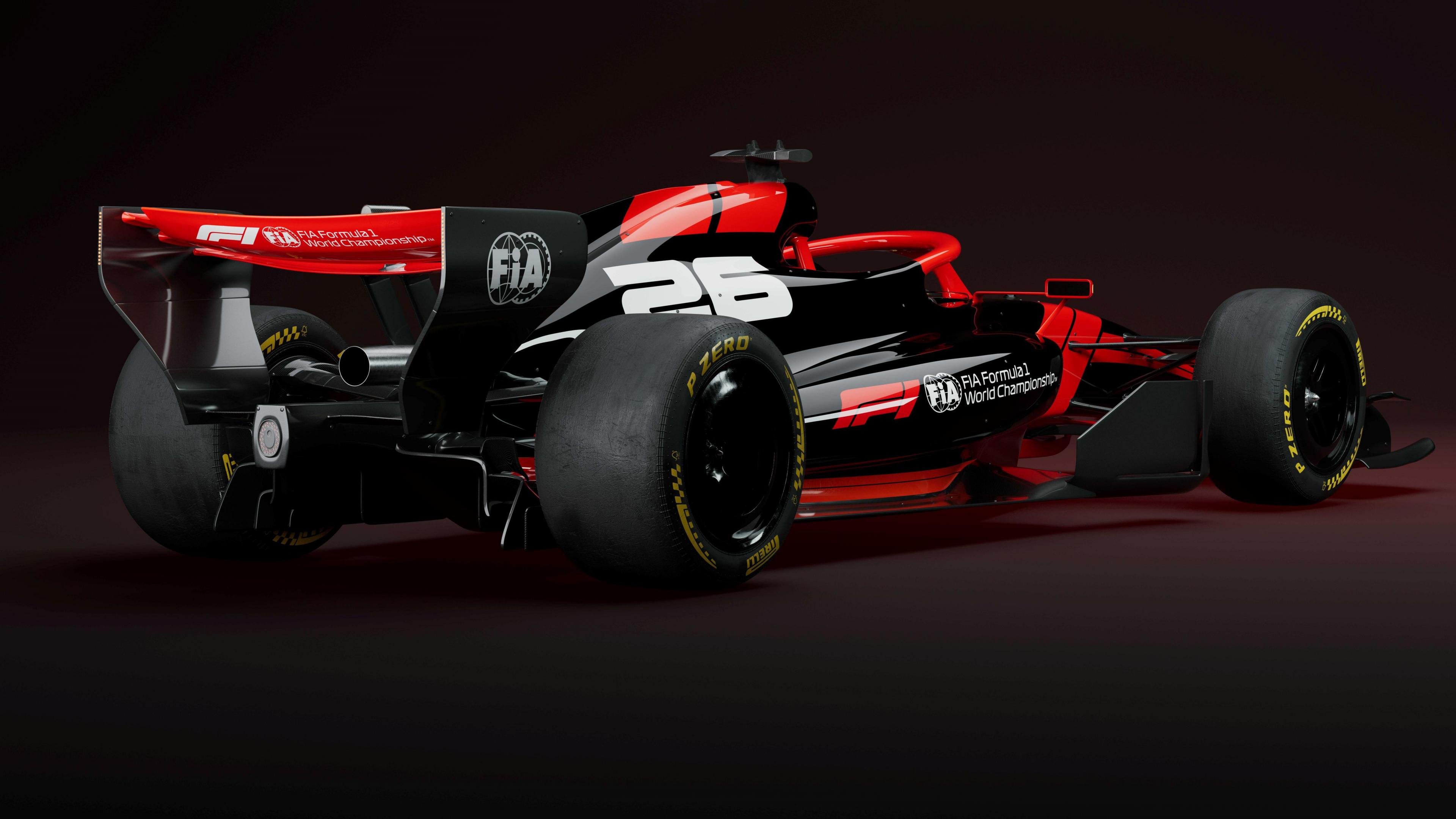
The vehicles for the 2026 season are designed to be smaller, nimbler and more environmentally friendly compared to current models.
Formula 1 has revealed the new vocabulary that will be used to reference the technical complexities of its revolutionary 2026 rulebook.
The racing series is embarking on what is arguably the most significant regulation change in its illustrious history next season, featuring new chassis and engine rules and the compulsory introduction of eco-friendly fuels.
The updated 1.6-litre V6 turbo hybrids, which maintain the 1.6-litre V6 turbo hybrid, boast a significantly increased electrical capacity, requiring key advancements in the aero packages.
During grand prix events, pilots will carefully oversee electrical energy – potentially on hot laps – to achieve the optimal performance.
Wide-ranging research were conducted with a diverse audience, including long-time followers and newcomers, to determine which terminology would aid comprehension of the main elements of the 2026 changes.
The stated goal was to present a set of intricate features of the sport as accessible as possible for the broadest viewership.
Consequently, previous placeholder terms for specific components – such as "x-mode and z-mode" for the moveable wings – have been abandoned in favour of straightforward terms that succinctly convey the real-world effect of the innovation.
Exploring the New Tech
According to rule-makers that drivers will have increased agency to choose strategies regarding battery management, energy recovery, and conservation.
The upcoming changes mandate a set of functions that will be clearly indicated on television graphics to improve the viewers' comprehension of the on-track action.
- Overtake Mode: This takes over from the current DRS. It provides a surge of additional ERS power deployable when a driver is within one second the leading car to execute an overtake.
- Power Mode: This is a driver-operated energy deployment from the energy recovery system that can be deployed for offensive or defensive moves. It delivers the pilot maximum power at the activation of a control.
Both of these crucial modes will have to be deployed strategically, as the overall battery capacity is restricted.
- Active Aerodynamics: Both the car's wings change configuration – spreading on the straights for low aerodynamic resistance and higher speed, and angling down in the bends for peak grip.
- Energy Harvesting: Drivers can recharge the energy store with energy harvested under braking, or during partial power application at the end of straights or in sections where only reduced throttle is required.
2026 Car Specifications
The 2026 cars will be reduced in size and weight compared to the 2025 spec, with a car length cut by 200mm to 3,400mm, width narrowed by 100mm – down to 1,900mm – and the minimum weight lowered by 30kg.
Overall downforce is expected to drop by approximately fifteen to thirty percent, although constructors will naturally regain performance as they optimize their packages.
Drag has been cut by 40%. The cars will feature moveable wing elements – both wings will adjust on the straight sections to reduce drag and enhance velocity and revert into place for optimal grip in corners.
Tyres will continue to use 18-inch wheel rims, but the tyres themselves will be reduced in width, by a quarter-centimetre on the front and three centimetres on the rear.
2026 Engine Regulations
The new power units will have an roughly half-and-half distribution in horsepower generated by the petrol engine and the ERS, increasing from about one-fifth electric power this year.
The hybrid system is simplified through the elimination of the MGU-H, the complicated and costly unit that harvested power from the turbo.
Cars will be mandated to operate on 100% sustainable fuel, manufactured from organic sources or synthetic industrial processes.


